History of trade, plantations, colonialism and colonization in the 13 Colonies Plantation Farming: Colonialism, Triangular Trade, Mercantilism, Trade, Industries and Plantations Plantation Farming
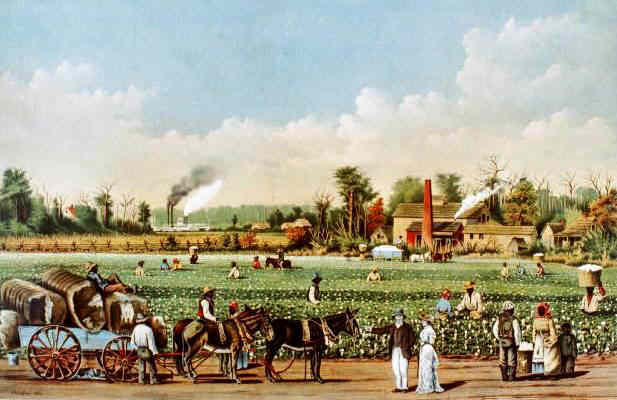
Plantation Farming was a system of agriculture in which large farms in the American colonies used the enforced labor of slaves to plant and harvest cotton, rice, sugar, tobacco and other farm produce for trade and export. In plantation farming crops were planted on a large scale with usually just one major plant species growing. The system of Plantation farming was based on 'cash crops' in which plants were sold for profits in distant markets and not used for personal use (subsistence farming) on the plantations. Facts about Plantation Farming
The following facts provide an overview of the advantages and the disadvantages of plantation farming. Facts about Planation Farming | | Facts | Facts about Plantation Farming | | | Fact 1 | Crops were planted on a large scale with usually just one major plant species growing | | | Fact 2 | The economy of plantation farming was based on agricultural mass production requiring a large labor force
| | | | Fact 3 | The Southern colonies who practised the system of plantation farming were the Maryland Colony, Virginia Colony, North Carolina Colony, South Carolina Colony and the Georgia Colony
| | | Fact 4 | Plantation Farming specialized in the growth of just one major plant species
| | | Fact 5 | The crops ideally suited to plantation farming in the Southern colonies were cotton, tobacco, rice, sugar cane and indigo (a purple dye)
| | | Fact 6 | The mass production of crops required a suitable transport system to transport the goods to market. The waterways of the South provided a natural transport system
| | | Fact 7 | The reason that the system of plantation farming sprang up in the South was due to the climate of the regions. Mild winters and hot, humid summers made it possible to grow crops throughout the year which was ideally suited for plantation farming
| | | Fact 8 | The difference between plantations and backcountry farms was economies of scale. Small backcountry farms had a small labor force and concentrated on 'subsistence farming', that is most crops were produced for personal use, any surplus was used to trade for goods not produced on the farm. The economy of the plantations was based on a massive labor force and the ability to produce large quantities of cash crops
| | | Fact 9 | Plantation farming requires a tropical or subtropical region
| | | Fact 10 | Plantation crops were determined by soil. The fertile soil of the Southern colonies was highly suited to the growth of plants used in plantation farming
| | | Fact 11 | The sheer size of the land covered made the plantations to large degree, self-sufficient and similar to a small village with the main house, slave quarters, a dairy, blacksmith's shop, laundry, smokehouse and barns
| | | Fact 12 | Crops were traded for items that could not be produced on the plantations including shoes, lace, thread, farm tools and dishes
| | | Fact 13 | The longer a crop's harvest period, the more efficient was plantation farming
| | | Fact 14 | Vast areas of land had to be cleared for planting and crops had to be sewn and harvested by hand - this was only made possible with a large labor force
| | | Facts | Facts about Plantation Farming | | Facts about Planation Farming |
Facts about Planation Farming | | Facts | Facts about Plantation Farming | | | Fact 15 | Cheap labor was essential for the plantations to become profitable. The use of slaves in the Southern colonies was extensive. After the initial cost of purchasing a slave little expenditure was required to support the slaves. The successive generations of slaves born on the slave plantations ensured that their masters gained new employees at no cost
| | | Fact 16 | The growing number of slaves over time allowed plantation farming to expand to farm different plantation crops.
| | | | Fact 17 | Plantation farming in the Southern colonies evolved over 200 years - it did not happen at once. Tobacco was the first crop used in plantation farming in the 1600's. Rice and Indigo Plantations were established in the 1700's. Cotton and Sugar Plantations were not established until the 1800's
| | | Fact 18 | The number of slaves in the Colonial Era increased from 10,000 in the 1600's to 400,000 in the 1700's
| | | Fact 19 | Plantation farming required minimum input from the owners - overseers were hired to manage the slaves and crop production. The owners of the small farms had to participate in the hard work associated with farming
| | | Fact 20 | Typical Plantations ranged from 500 to 1,000 acres. Each acre produced about 5,000 plants
| | | Fact 21 | Tobacco: Tobacco was the first crop raised by the system of plantation farming and became the biggest export to England in the 1700's, followed by the exports of rice
| | | Fact 22 | Indigo: The cultivation of indigo produced one-third of the total value of the exports from the Southern slave plantations before the Revolutionary War in the 1800's. Indigo was not grown on colonial plantations until Eliza Lucas Pinckney (1722–1793) developed the indigo plants as an additional cash crop in the late 1700's
| | | Fact 23 | The use of slaves kept the costs down on the Slave Plantations - they were not well fed, well housed or well treated. Slaves were sometimes expected to work 18 hours a day. Paid workers would have significantly reduced the profits made from plantation farming
| | | Fact 24 | There was limited machinery available to help with the arduous work related to plantation farming - the work was all done by the slaves
| | | Fact 25 | Plantation farming involves the deliberate introduction and cultivation of economically desirable species of tropical plants and the widespread replacement of the original native and natural flora.
| | | Fact 26 | The labour-intensive system of plantation farming declined abruptly in the United States with the abolition of slavery
| | | Facts | Facts about Plantation Farming | | Facts about Planation Farming |
Plantation Farming The information and facts about plantation farming in the Southern colonies provides a fast overview of this particular system of agriculture. The facts provide answers to many questions raised about the difference between large plantations and small farms, the type of crops planted, the climate required to successfully raise plantation crops, the necessity of a large, cheap labor force to maximise profits on a plantation, the use of slaves on plantations and the significance of foreign trade and exports on plantation economy. Plantation FarmingInteresting Facts and information the Plantation Farming of Colonial America Slave Plantation Farming Fast Facts and info about Plantation Farming in the Southern colonies Plantation Farming is great resource for kids Social Studies Homework help for kids on Plantation Farming
|
|